

A company can grow in headcount without growing in autonomy.
It can hire employees, managers, specialists, and agencies, and still remain dependent on the nervous system of one founder.
From the outside, this may look like commitment.
From the inside, it is often architectural failure.
Ravenville is not designed to become a founder-exhaustion machine.
The goal is not to build an empire by deleting life.
The goal is to build an empire that can hold life.
The false founder myth
Modern founder culture often glorifies exhaustion.
It treats permanent overwork as proof of seriousness.
It turns suffering into status.
It makes the founder’s exhaustion appear noble, inevitable, or even desirable.
But exhaustion is not always commitment.
Sometimes exhaustion is simply a signal that the system has not been designed well enough.
A founder who must remain involved in every decision, conflict, quality question, and strategic interpretation has not built leverage.
The company may be large.
But it is not yet mature.
Employees are not leverage by default
Hiring people is not the same as building an organization.
A company can have hundreds of people and still depend on one mind.
If every important decision returns to the founder, the founder is still the decision system.
If every quality question returns to the founder, the founder is still the only standard.
If every conflict returns to the founder, the founder is still the emotional regulator.
If every strategic interpretation returns to the founder, the founder is still the only source of meaning.
That is not an orchestra.
That is a crowd of instruments waiting for one exhausted person to play them.
Why founder dependency happens
Founder dependency usually does not happen because people are incompetent.
It happens because judgment was never encoded into the system.
The company may have tasks, meetings, processes, and managers.
But it may not have enough doctrine.
It may not have clear decision rights.
It may not have trusted lieutenants.
It may not have operating rituals.
It may not have quality standards.
It may not have review loops.
It may not have escalation paths.
It may not have a cultural immune system.
The rules may exist.
But only in the founder’s head.
And when the rules exist only in the founder’s head, the founder cannot leave the room.
The conductor model
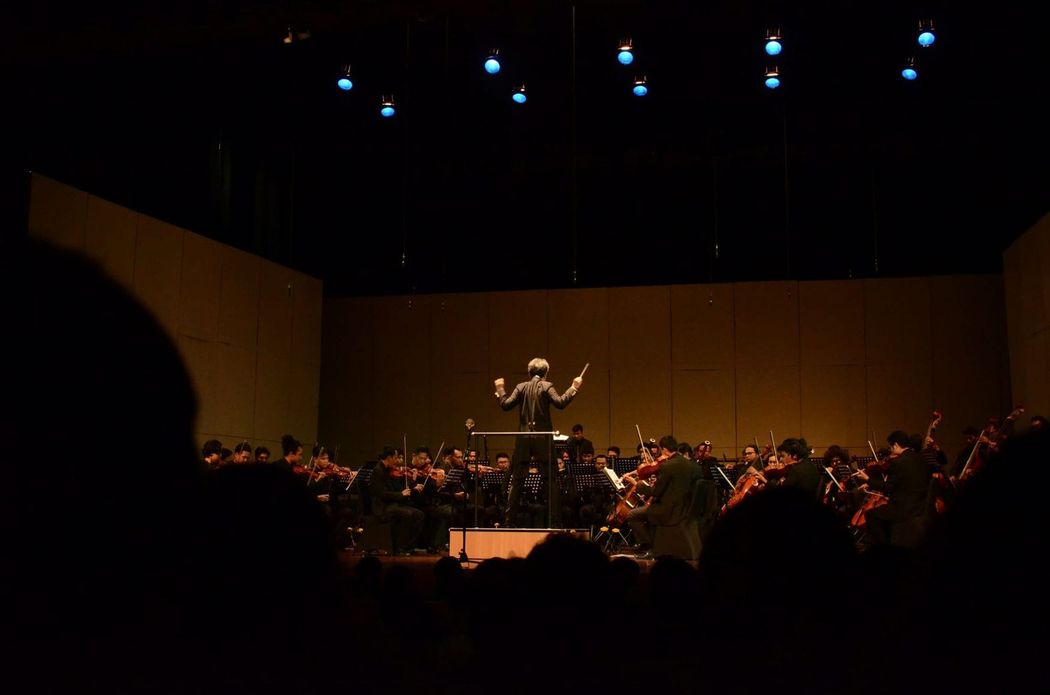
The better model is the conductor model.
The conductor does not play every instrument.
He does not play the violin, trumpet, cello, flute, and timpani.
The orchestra plays.
The musicians are specialists. They know their craft. They read the score. They understand their section. They can perform without being manually instructed on every note.
The conductor does something else.
He shapes timing.
He gives emphasis.
He signals restraint.
He controls transitions.
He creates pauses.
He amplifies certain sections.
He holds the interpretation of the whole.
Without a conductor, a professional orchestra may still play the notes.
With a conductor, the music breathes.
The founder as conductor
This is the founder role Ravenville is designed around.
The founder should not be the company’s only operator.
The founder should not be the company’s only manager.
The founder should not be the company’s only quality control system.
The founder should not be the company’s only source of judgment.
The founder should act as conductor.
In this model, the founder provides:
- doctrine
- standards
- final judgment
- strategic direction
- mythic coherence
- quality bar
- role clarity
- cultural tone
- executive emphasis
- integration between domains
- correction when timing slips
- amplification when a section needs force
- restraint when a section overplays
This is not passivity.
It is not abdication.
It is a higher-order role.
Delegation under supervision
The model is not:
delegate and disappear
The model is:
delegate under supervision
People need ownership.
But the system needs standards.
Operators should execute.
Lieutenants should decide.
Producers should coordinate.
Craftspeople should create.
But the frame must remain coherent.
The conductor does not abandon the orchestra.
He simply stops trying to personally play every instrument.
Control carried through structure
Many organizations know only two modes.
The first mode is manual control.
The founder remains involved in everything, becomes the bottleneck, and eventually exhausts himself.
The second mode is careless delegation.
The founder steps back, but the company drifts because the operating frame was never properly encoded.
The conductor model introduces a third mode:
control carried through structure
Control does not need to mean constant manual involvement.
Control can be carried through:
- doctrine
- rhythm
- standards
- selection
- incentives
- rituals
- trusted people
- review gates
- cultural expectations
- self-correcting systems
The founder’s intent becomes distributed through architecture.
What must be built
For this model to work, Ravenville must build more than ambition.
It must build operating architecture.
That includes:
- doctrine
- playbooks
- templates
- review rituals
- decision rights
- quality standards
- onboarding
- apprenticeships
- trusted lieutenants
- domain owners
- feedback loops
- escalation paths
- financial discipline
- cultural immune system
Without these, delegation becomes chaos.
With these, delegation becomes leverage.
Empire with a life
Ravenville is not meant to produce only output.
It is meant to preserve and amplify life.
A company that destroys the life it claims to serve has betrayed its own purpose.
The empire must not devour the kingdom.
This is why the conductor model matters.
It protects the founder from becoming the company’s fuel source.
It protects the organization from dependency on one nervous system.
It protects the work from chaos disguised as freedom.
And it protects life from being sacrificed to scale.
The final principle
A founder should not need to play every instrument.
The orchestra should play.
The founder should shape timing, emphasis, restraint, amplification, coherence, and interpretation.
That requires doctrine, standards, lieutenants, rituals, decision rights, review loops, and self-correcting systems.
The goal is not to disappear.
The goal is to stop being the bottleneck.
The principle is simple:
If the empire requires permanent exhaustion, the architecture failed.